


Throughout the world – probably not in your city – there are entire communities who live longer, healthier lives than the rest of us.
I’m referring to Blue Zones, places where, one imagines, villagers in their nineties grow their own food, socialize with neighbors, and sleep soundly because they’ve never once doomscrolled or binge-watched Netflix in the evening.
Do the residents of these communities actually live longer and healthier? If so, what can we learn from them? What’s their “secret”?
These seem like reasonable questions. The answers are often lacking in nuance.
For instance, a British scholar named Saul Newman argues that Blue Zones don’t exist. Residents only seem long-lived because they have no birth certificates and misremember or exaggerate their age (or they’re actually dead and relatives are engaging in pension fraud).
I dislike this kind of either-or thinking. A more plausible, nuanced claim would be that Blue Zones exist but their longevity estimates are inflated. (Experts have persuasively rebutted Newman’s criticisms, though the news media hasn’t caught up yet – he wrote an op-ed for The New York Times last year.)
Blue Zone proponents aren’t necessarily more subtle. Perhaps the most prominent among them, Dan Buettner, claims that nine recurring habits are responsible for Blue Zone longevity. He’s made a ton of money selling this idea in books, municipal programs, Netflix specials, etc., in spite of the fact that the nine habits are mostly just common sense (avoid processed foods, reduce stress, prioritize family, etc.). As one expert suggested, Buettner is just engaging “standard public health promotion 101.”
Longevity can’t be reduced to a simple formula for how to live. Genes have an impact, and individual lifestyles tend to complicate matters. Jeanne Calment, the oldest verified person in history, smoked for nearly a century – from age 21 through 117 – before cutting back during her last five years.
My point is that if we want to actually learn something from communities where people are particularly healthy and/or live long, we ought to avoid caricature. They may not be healthier in every sense, and what works for them may not be immediately obvious.
This is why I love a new study demonstrating a strikingly low prevalence of dementia among indigenous Bolivian peoples.
The study identifies communities where lifestyle promotes healthy cognitive aging. But every claim in this study comes with a qualification. Yes, these folks are less prone to dementia than we are, but the extent of the difference has been exaggerated. And yes, their lifestyles are healthier, but not in every sense, and a genetic variant influences dementia risk at the individual level, just as we find here.
In short, the new study offers a nuanced look of why some communities seem to be the least prone to dementia. This is the kind of science I listen to.
As you can probably guess, I won’t be claiming that the Bolivian lowlands contain a dementia Blue Zone. But there is something to be learned from the lifestyles of the indigenous peoples.
A bit of background before digging in.
Dementia
“Dementia” refers to a decline in cognitive functioning, over and above what happens during normal aging.
Just as “fever” is not a disease but rather a symptom that can arise from many causes, so “dementia” consists of symptoms (impairments in memory, reasoning, verbal skills, etc.) that can stem from many underlying conditions, the most common in countries like the U.S. being Alzheimer’s disease (roughly 60-80% of cases).
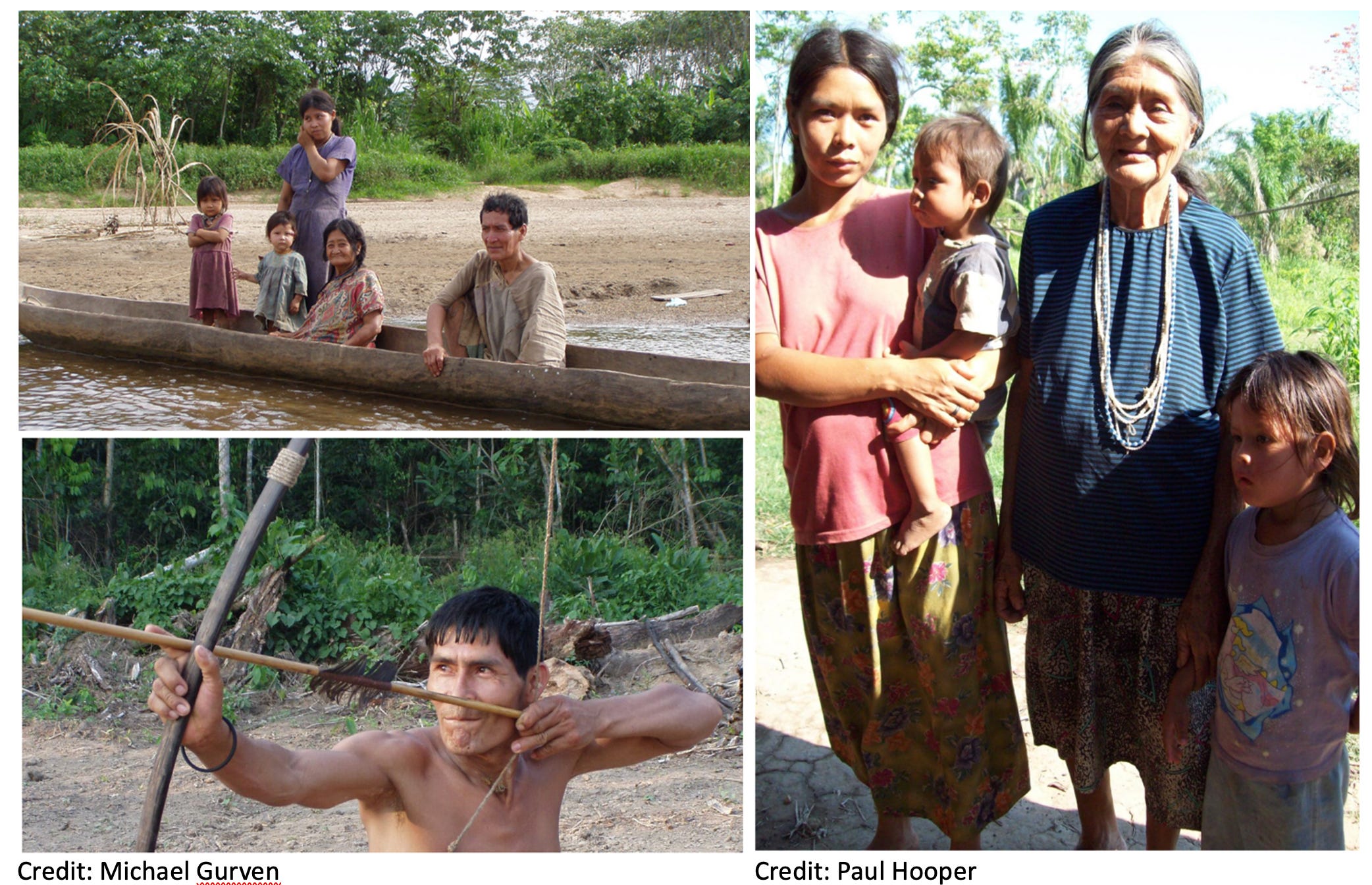
The Tsimané and the Mosetén
The study I’ll be describing focuses on two indigenous peoples in lowland Bolivia, the Tsimané and the Mosetén.
Even the most straightforward observations of these people illustrate some of the challenges in describing a community as especially healthy.
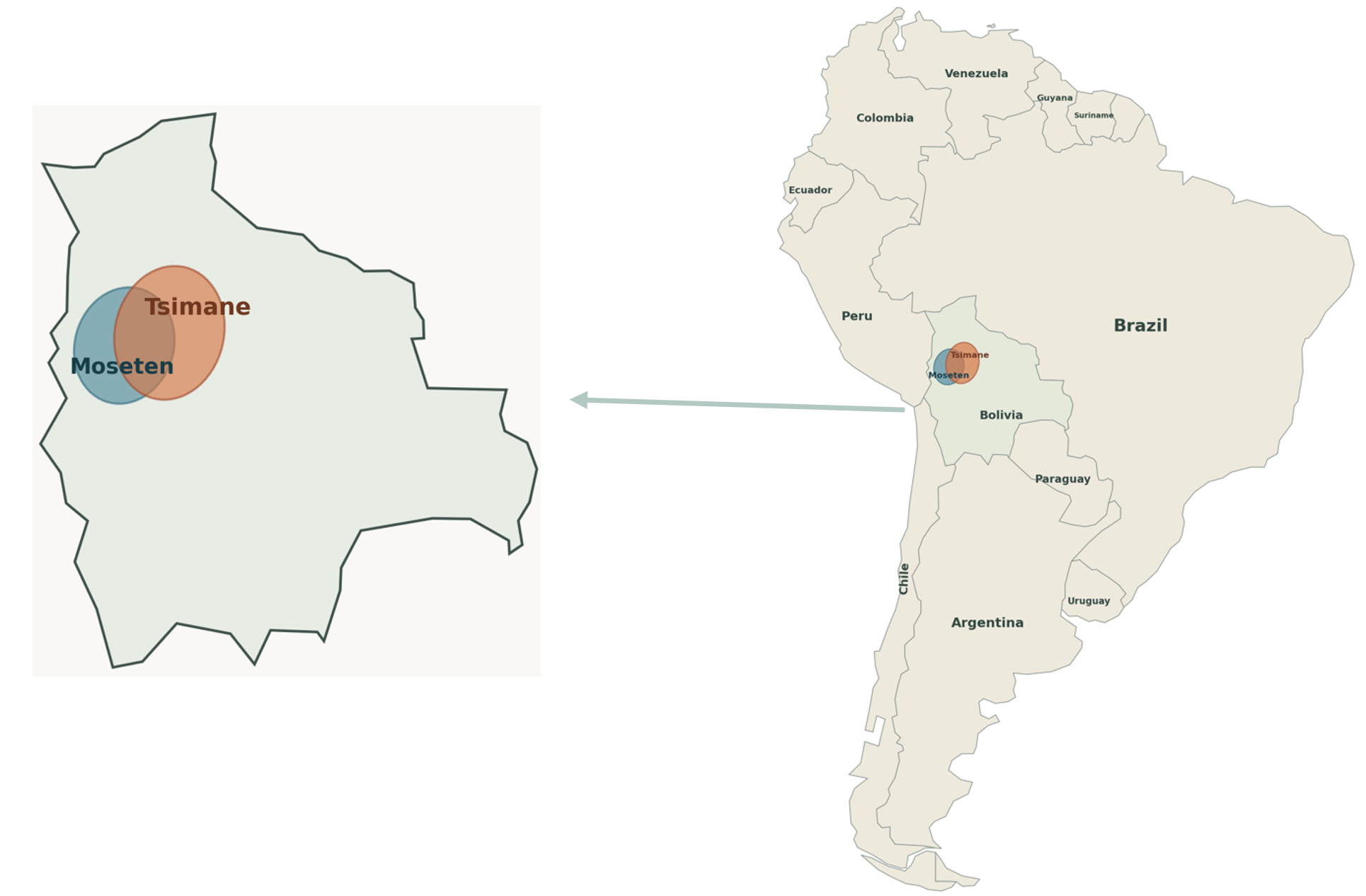
The Tsimané live in small villages in the Beni region of Bolivia. They hunt, fish, forage, and grow crops (mainly plantains, rice, manioc, and corn). The Mosetén live nearby, in the La Paz region, and have similar lifestyles but greater access to schools, towns, and medical care. (The maps below are my only use of AI for this post, by the way.)
Indigenous peoples are sometimes depicted as especially healthy, both physically and mentally, thanks to minimal influence from ultraprocessed foods, sedentariness, screens, social isolation, and other scourges of Western living.
Indeed, the Tsimané have the lowest rates of coronary artery disease ever recorded. A 2017 study found that 85% of them had no detectable coronary artery calcium, a sign of atherosclerosis or “hardening of the arteries”. The Tsimané and the Mosetén also have unusually low rates of obesity, hypertension, high blood sugar, and LDL cholesterol (the “bad” kind).
News outlets ranging from NPR to the BBC have announced that the Tsimané have “the healthiest hearts in the world.” Whether that’s true or not, they and the Mosetén also suffer from high rates of anemia, infectious diseases, and intestinal parasites, and their infant and child mortality rates are higher than in the U.S. and other developed countries. Poor sanitation and limited access to medical care are among the culprits.
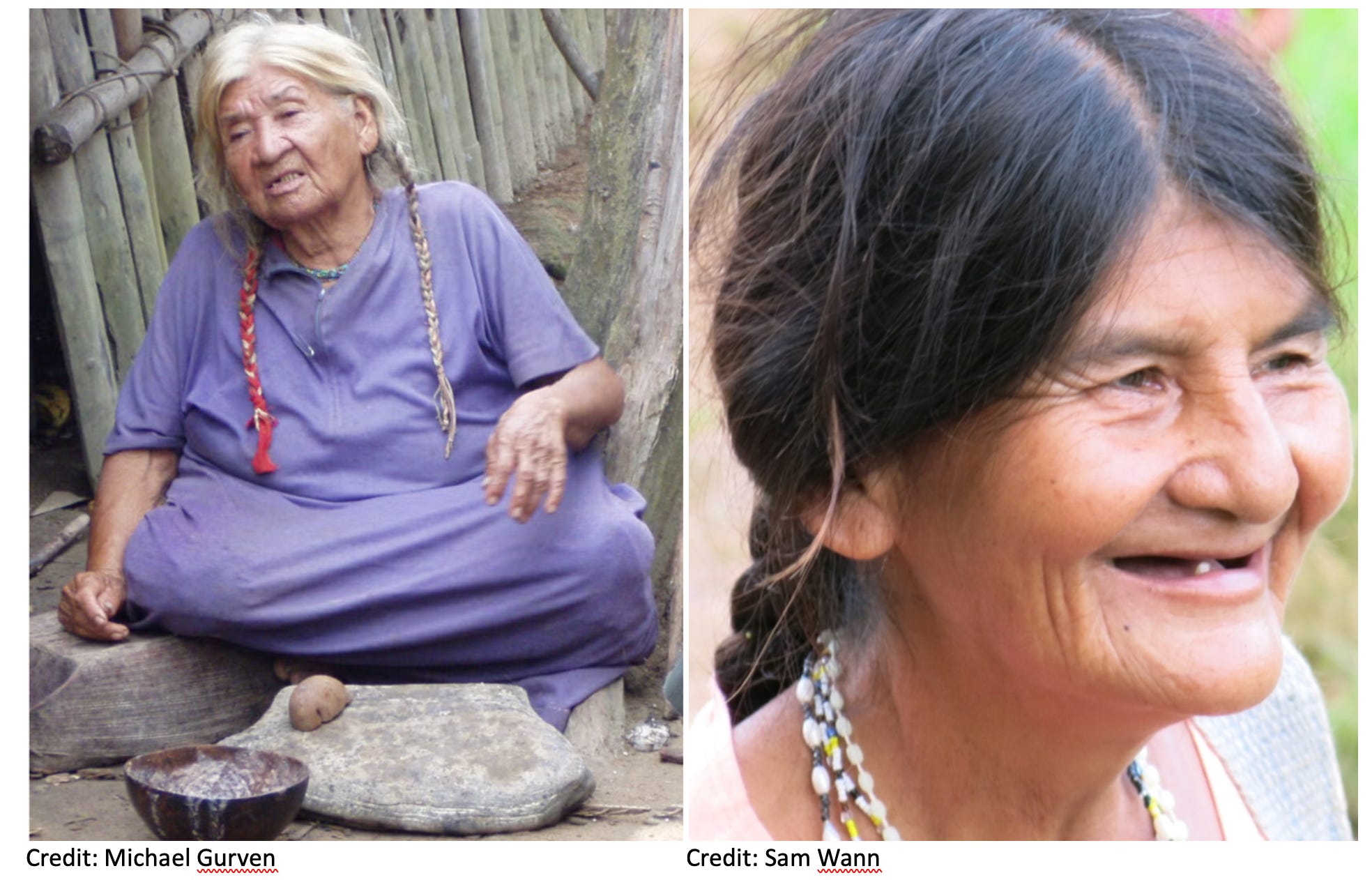
In short, indigenous Bolivians are both more and less healthy than the average American. The communities examined in the new study are certainly not Blue Zones in any broad sense. A key question addressed in this study is to what extent their aging residents are at least cognitively healthier.
The new study
This study, led by Margaret Gatz at USC, was published in Alzheimer’s & Dementia on September 15.
Dr. Gatz and colleagues have been following 730 Tsimané and Mosetén ages 60 and up who had no dementia, according to physician interviews, cognitive tests, and interviews with family members.
On three separate occasions since 2017, participants were classified as having normal cognition, mild cognitive impairment, or dementia. (Inter-rater reliability among independent observers was generally high.) Data were also recorded on blood pressure, glucose, cholesterol, thoracic aortic calcium, biomarkers of inflammation, and and the presence of the APOE ε4 allele that’s known to increase the risk of developing Alzheimer’s disease.
Two key findings
1. Extremely low prevalence of dementia.
2% of Tsimané and 1.7% of Mosetén 60 and older were diagnosed with dementia. (Gatz and colleagues reported similar rates in prior studies.)
This is remarkably low. At any one time, as many four times as many Americans in the same age range would have a diagnosis.

Data like this has prompted media claims that the Tsimané and Mosetén rarely develop dementia, but the next finding illustrates why this is a mistake.
2. Short survival following the onset of dementia.
People in these communities who develop dementia don’t live long. Gatz and colleagues estimate survival rates two or three times shorter than found among peers in the U.S. (They attribute the difference to food insecurity, limited medical care, and other health problems.)
In theory, the Tsimané and Mosetén develop dementia as often as we do, but because they don’t survive as long, the condition seems rarer in their communities.
To put it in technical terms, the fact that prevalence is low doesn’t prove that incidence is.
Here’s where a bit of nuance is needed. Their incidence of dementia – estimated as 7.4 cases per 1,000 people per year – was still “modestly” lower than what’s reported in most studies on Americans and Europeans.
So yes, the Tsimané and Mosetén are less prone to dementia than we are. But that difference has been exaggerated. And, as Gatz and colleagues acknowledge, small case rates require a cautious take on the data.
3. Higher rates of dementia among those carrying at least one copy of an APOE ε4 variant.
About 21% of the Tsimané and Mosetén carry this genetic risk factor for dementia (which falls within the 20-30% range estimated for the U.S.), and these individuals were about five times as likely as non-carriers to develop dementia. Small case rates rule out any strong conclusions here.
What can we learn from the findings?
I reached out to lead researcher Margaret Gatz for her thoughts on a couple of issues.
For instance, I asked her why the Tsimamé and Mosetén seem to have less dementia and mild cognitive impairment (MCI) than some of the other indigenous groups that have been studied. Her answer led straight to the broader issue of why the Tsimamé and Mosetén differ in this respect from just about everyone:
“[T]here are a few other indigenous or rural subsistence populations with low dementia/MCI incidence. They have in common that they are not highly integrated into the majority culture, so they continue in the main to live as they have been living in the long past. The indigenous groups with dramatically high rates of dementia/MCI have in common that they have been integrated into the dominant culture, sometimes through force or colonialization, and have acquired some of the least healthy lifestyle habits of that culture—sugary drinks, fast food hamburgers, alcohol, physical inactivity. This transition may also be reflected in rates of obesity and diabetes.”
So, what is it exactly about our culture (i.e., contemporary Western culture) that makes the difference? Is it all the bad habits she described, plus others known to increase the risk of dementia, or is it just a few?
I love her response to this question because it acknowledges that Tsimané and Mosetén experience conditions that both promote and protect against dementia. If they experience “modestly” less of it than we do, it’s because the protective factors are stronger on balance:
“My current best thinking is that the environment and health behaviors of Tsimane and Moseten represent a balance of risk and protective factors for brain health. The high rates of – often untreated – infection, including poor oral health, high exposure to smoke from cooking, lack of sewerage, and other environmental adversities all work against brain health. At the same time, we can point to conventionally healthy behaviors (eating whole foods, staying active, etc.) as protective. Right now, the balance is such that dementia rates tend to be modest.”
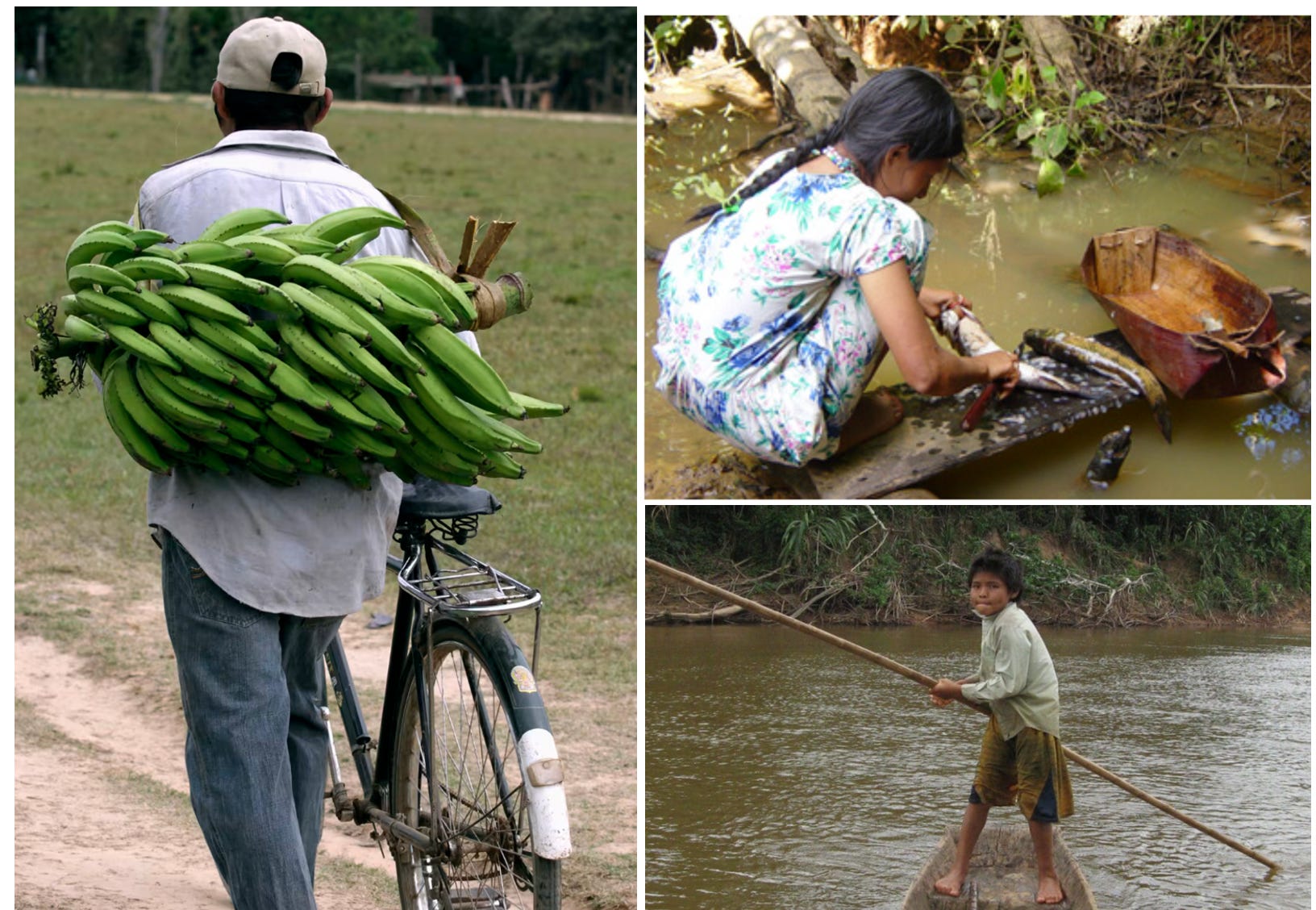
What accounts for Tsimané and Mosetén advantages?
Why do older Tsimané and Mosetén show better cognitive and cardiovascular health than Americans do on the whole?
Dr. Gatz mentioned physical activity and whole foods. The difference in activity levels, at least, does seem clear. A study published last year showed that in their 50s and 60s, the Tsimané average about 16,000 steps per day, while the Mosetén average around 14,000. This is about twice as many steps as reported among Americans of the same age. (The study also hints that among the Tsimané, who are more physically active than the Mosetén, greater activity is associated with better brain health, though the effects are small at best.)
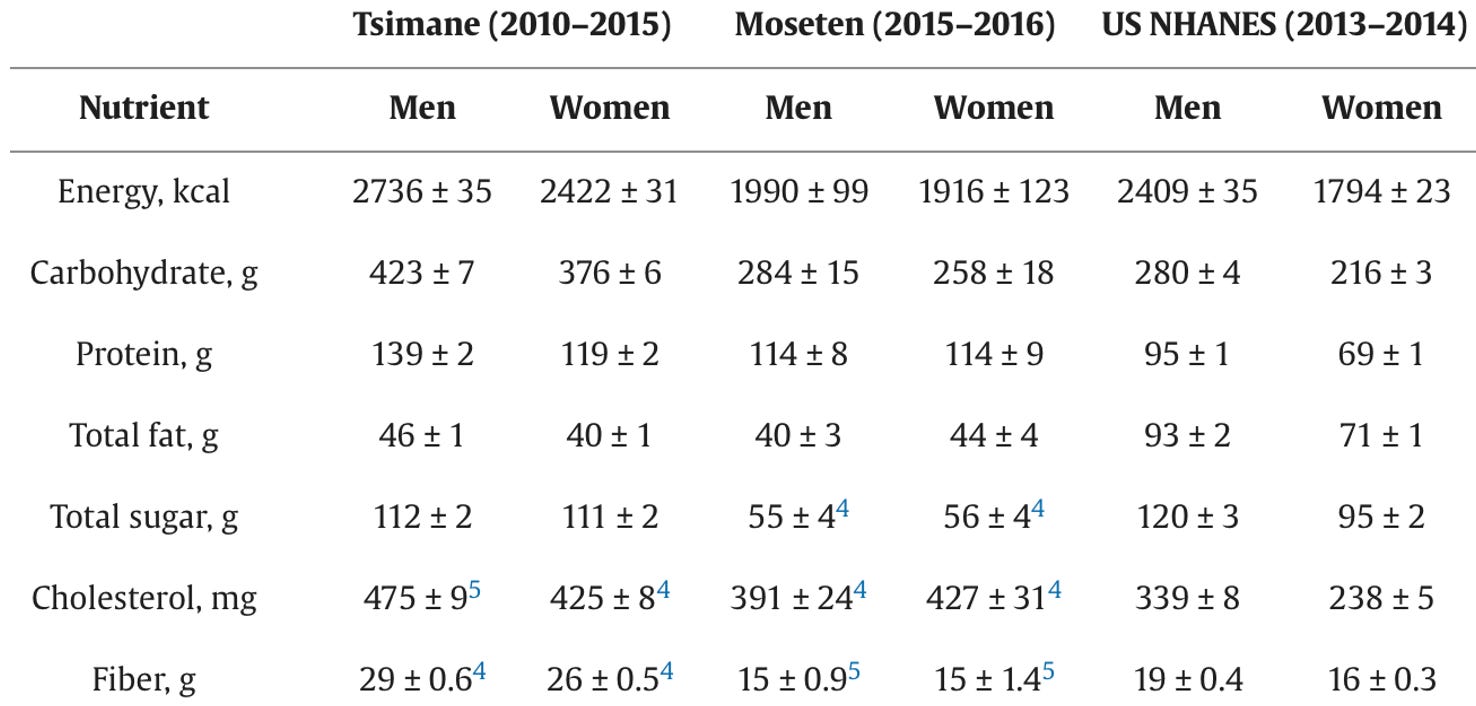
As for diet, both groups rely on complex carbohydrate, high-protein, low-fat diets consisting mainly of whole foods. However, the table below, from a 2018 study, adds a bit of nuance. Tsimané and Mosetén diets aren’t uniformly healthier than what the average American eats. For instance, the Tsimané consume more fiber on a daily basis than we do but roughly the same amount of sugar. The Mosetén eat less fiber than we do but only about half the sugar.
As far as we know, the story for other risk factors is nuanced too. Smoking is more common among Tsimané men than among Americans of any gender, though lifetime intake is relatively low. Both the Tsimané and Mosetén drink a kind of homemade beer called chicha, and, increasingly, store-bought alcohol, though it’s not clear how their intake compares to that of Americans. This brings me to a final point.
The problem of moving targets
One thing that’s constant about culture is that it constantly changes. Okinawa and Nicoya, two of the original Blue Zones, have lost their longevity advantage in recent decades. In the case of Okinawa, poorer diets and sedentariness have been blamed.
Some folks think of indigenous peoples as sort of timelessly healthy, when in fact most of them are increasingly shaped by Western influences. Sugar intake among the Tsimané and Mosetén is rising, for instance, as is the consumption of commercially-produced alcohol. Meanwhile, Western societies are changing too. These shifts make it hard to understand what accounts for cardiovascular and cognitive advantages among the indigenous Bolivians, since outcomes like atherosclerosis and dementia emerge over relatively long periods of time.
What we can learn from these peoples is that their way of living is, on balance, healthier than ours – at least for cardiovascular and cognitive health – even if we can’t be sure about the relative importance of what they eat, how physically and socially active they are, and how much they gain from minimal exposure to some of the more harmful Western influences.
There’s no formula for a long, healthy life, because formulas imply certainty. We don’t know for sure why some communities are especially healthy, though we have plenty of hints. In any case, you’re not a community. Applying the best available evidence about lifestyle to your own particular circumstances involves uncertainties too.
(Now that I’ve come to the end of this post I plan to stretch and do some core exercises for about 20 minutes, but I can’t be sure how much I'll benefit from this, other than feeling good. Perhaps feeling good is good enough.)
Thanks for reading!
Glad she mention environment as my One Health viewpoint seems to want to connect all the factors. I shared information about air pollution and the effect on cardio-vascular and dementia. Two papers from The Lancet (Long-term air pollution exposure and incident dementia: a systematic review and meta-analysis) "Background
A rapidly evolving evidence base suggests that exposure to outdoor air pollution is a risk factor for the onset of dementia, with an upturn in publications since 2022. We sought to synthesise and critically assess this evidence base accounting for the latest studies" and JAMA addressed this issue (Ambient Air Pollution and the Severity of Alzheimer Disease Neuropathology) "Findings In this study of 602 autopsy-confirmed individuals, exposure to higher levels of fine particulate matter air pollution (PM2.5) was associated with more advanced Alzheimer disease neuropathologic change (ADNC) and more advanced clinical measures of dementia. The association between PM2.5 exposure and clinical dementia severity appeared to be statistically mediated by ADNC.".
There's also all the other factors like culture and lifestyle (food, physical and social) that you eloquently put together. Think we can both agree it's complicated but the search for the "Fountain of Youth" and hucksterism goes on.
Gatz's study supports that cognitive aging is coherence under pressure. Dementia results when the system can’t absorb disturbance anymore. I love that you refuse to flatten the biology, but describe aging as cumulative pressure imbalance.