


I love sugar the way some people love Elvis.
Two weeks ago, thousands of fans descended on Graceland for his annual candlelight vigil, proof that The King continues to be adored in spite of the nasty revelations that accumulated over the years (the 14-year-old girlfriend, the drug abuse, etc.).
In much the same way, I’ve indulged in sweets my entire life in spite of perpetually discovering reasons why I shouldn’t.
Even as a kid I knew that sugar promotes tooth decay and obesity. As time passed, added sugars were blamed for an increasing range of health problems. Concerns about coronary heart disease grew to include cardiovascular risk factors (e.g., high blood pressure and triglycerides) and then cardiometabolic health in general. The historical progression is nicely documented in Gary Taubes’ 2016 book The Case Against Sugar.
A study published last week reminded me that sugar intake has also been linked to cancer.
Cancer? I just want to eat my dessert in peace.
The researchers found that drinking one or more sugar-sweetened beverages per day increases the risk of stomach cancer. This is consistent with the view that SSBs are among the unhealthiest added-sugar products.
So, ice cream is bad, but sodas and juice are worse? I find this unsettling. Perhaps you do as well; as many as two-thirds of American adults consume SSBs on a daily basis. And so, in this newsletter, I want to address four questions:
1. Why might added sugar consumption increase cancer risk?
2. Could sugar-sweetened beverages be especially risky?
3. Can we trust the new study (and other recent data)?
4. How much added sugar can a person safely consume?
First, a brief but necessary foray into the language of sugar.
Sweet words
I’ve been using the term “sugar” as shorthand for added sugars (i.e., those added to food products as opposed to those that occur naturally in fruits, vegetables, milks, etc.).
Added sugars mainly consist of sucrose, corn syrup, high-fructose corn syrup, honey, maple syrup, and molasses.
Sucrose, or table sugar, is the stuff found in our kitchens and what’s usually meant by the term “sugar” on a product label. When digested, sucrose breaks down to 50% glucose and 50% fructose.
The proportions of glucose and fructose vary across sugar sources. Except for corn syrup, which is mainly glucose, the ratios are all fairly close to 50-50. (High-fructose corn syrup, in spite of its name, contains no more than 55% fructose.)
In a moment I’ll discuss why the glucose-fructose distinction matters.
1. Why might added sugar consumption increase cancer risk?
Sugar itself doesn’t seem to be carcinogenic (with one exception I’ll get to later). Rather, any connections between sugar and cancer are assumed to be indirect.
The clearest example is the link between sugar intake and obesity, a known risk factor for a variety of cancers.
Although sugar contains more calories by weight than fruits, vegetables, and lean meat, it’s less calorically-dense than cooking oils, nuts, and highly fatty meats and cheeses. Sugar isn’t especially fattening, in other words.
Still, high-sugar diets promote obesity, because sugary foods are easily overeaten: They taste great, and the sugar itself provides no fiber or protein that would induce feelings of satiety. You eat one cookie, then another, and two more after that because you don’t feel full yet. (Once you do get full, rapid absorption of the sugar may lead you to feel hungry again relatively quickly.)
In short, eating too much sugar increases the risk of obesity, and obesity increases the risk of cancer.
If this were the end of the story, we wouldn’t need to fear sugar-cancer connections per se. The key risk factor would be obesity, and, for some people, cutting back on sugar would be one of many strategies that mitigate risk.
In recent years, scientists have proposed that added sugars increase cancer risk somewhat independently from obesity effects. I find this unsettling too, given that I’m not obese but do indulge my sweet tooth.
Recall that most added sugars break down into glucose and fructose (which consist of differing arrangements of the same carbon, hydrogen, and oxygen atoms).
The glucose from added sugars stimulates insulin secretion. As you eat that doughnut, insulin helps your body make use of the additional glucose that’s beginning to circulate in your bloodstream. However, if you routinely eat too much sugar, insulin sensitivity declines, your pancreas releases more to compensate, and insulin levels may remain chronically high.
According to some researchers, what you have now are conditions that promote the survival and proliferation all sorts of cells, including ones that become cancerous. Crudely speaking, excess insulin activates messaging processes that prompt cells to grow, survive, and divide.
Once cancer cells do develop, they consume large amounts of glucose (a key feature of the Warburg effect). If insulin sensitivity has declined to the point that blood sugar is chronically high, more fuel will be available to the cancer cells.
Meanwhile, the fructose from added sugars is mostly metabolized in the small intestine and liver. When sugar intake is excessive, the liver produces more fat. This also reduces insulin sensitivity while causing other changes that may increase the risk of cancer (liver-fat accumulation, higher triglycerides, inflammation, oxidative stress).
There’s no consensus on how independent these changes are from obesity effects, or how strongly they promote cancer growth, if at all. The point is simply that there are plausible mechanisms linking sugar intake to cancer.
2. Could sugar-sweetened beverages be especially risky?
Sugar-obesity associations are stronger for SSBs than for solid foods. The reason is that SSBs tend to be quicker and more efficient calorie-delivery products. You don’t take time to chew them. They rarely contain protein or fiber. They leave the stomach more rapidly than solid foods do. As a result, feelings of fullness tend to be weaker, and calories can be consumed more rapidly. This promotes obesity, as well as the surges in glucose and insulin that may ultimately contribute to cancer risk independently from obesity effects.
So yes, in theory, added sugar may be more harmful when delivered by SSBs as opposed to solid foods. But do SSBs actually increase cancer risk? As I’ll discuss later, the evidence is mixed. The new study is the first to focus specifically on gastric cancer (i.e., stomach cancer).
3. Can we trust the new study (and other recent data)?
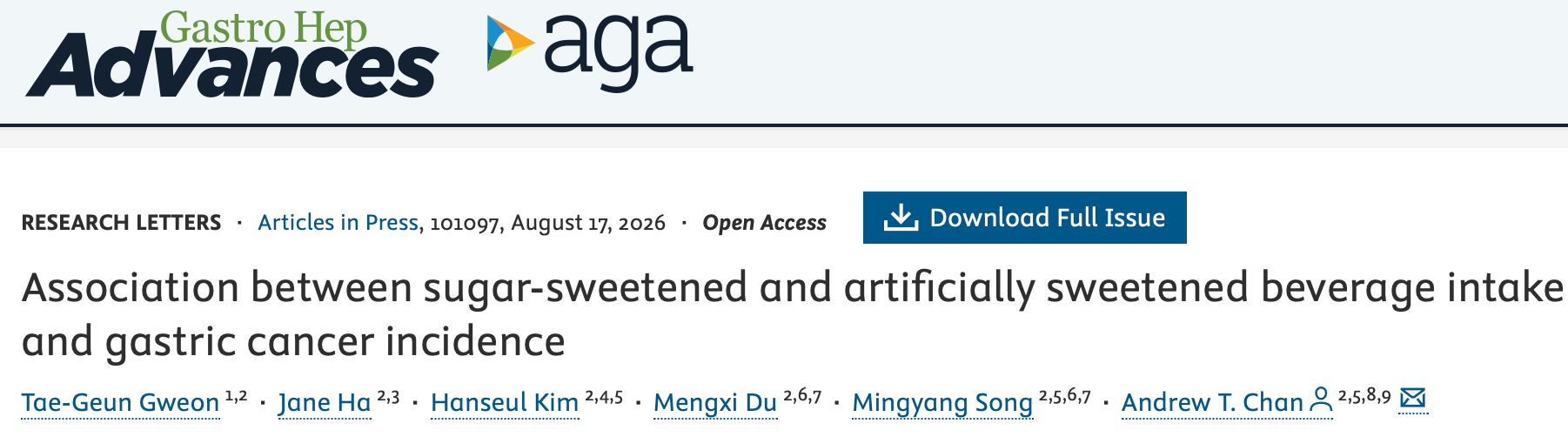
This study, led by Tae-Geun Gweon and senior author Andrew Chan, both affiliated with Harvard Medical School, is in press at Gastro Hep Advances and was posted online on August 17.
The researchers tracked 112,284 participants in two large prospective cohorts, the Nurses’ Health Study (NHS) and the Health Professionals Follow-up Study (HPFS). Data collection began in 1986. Dietary intake was recorded every 4 years.
Sugar-sweetened beverages (SSBs) consisted of carbonated drinks, punch, lemonade, and sports drinks. Participants were asked how many 8-ounce servings of each SSB they routinely consume, and each response was then categorized as Never, 1-3 servings per month, 1-3 servings per week, 4-7 servings per week, or > 1 serving per day.
By the end of data collection, 278 participants had been diagnosed with gastric cancer.
Who were these individuals? What increased their chances of developing the disease?
After adjusting for various risk factors (BMI of course, as well as diet, exercise, smoking, alcohol consumption, diabetes, medication use, and more), the researchers found a link between the highest amount of SSB intake and gastric cancer rates.
Compared to participants who consumed no SSBs, those who drank more than 8 ounces per day had 2.45 times the rate of gastric cancer. No differences were found for lower levels of consumption.
Scary, right? In the U.S., single-serving SSBs often come in 12-ounce bottles or cans. The new study suggests that merely exceeding 8 ounces per day more than doubles the risk of stomach cancer. This raises an important question…
Can we trust the data?
In a word, no.
This study is so deeply flawed the researchers might be considered irresponsible for publishing it.
I’m no advocate for SSBs – I would describe most of them as unhealthy – but we need to understand exactly how harmful they are without exaggerating the risks. Unfortunately, the new study has already been covered in high-circulation outlets ranging from Fox News to The Hill (and, of course, AI has noticed).

Here are three reasons why the findings are untrustworthy and misleadingly grim:
1. Incomplete data.
The researchers only asked about carbonated drinks, punch, lemonade, and sports drinks. This excludes numerous products, including sweetened coffees, teas, and drinkable yogurt. These are major omissions. As many as 4 in 10 Americans drink sweetened coffee and/or tea on a daily basis. A 13.7-ounce bottle of Starbucks White Chocolate Mocha Frappuccino contains 32 grams of added sugar, or 64% of the Daily Value (i.e., the FDA’s recommended maximum).
The incompleteness of the SSB measures undermines their validity – and makes the study findings less scary. Whether participants did or did not develop cancer, they were drinking more SSBs than the researchers reported.
2. Ambiguous data.
The researchers treated all SSBs alike. 8 ounces of any one product was assumed to be just as sugary as any other.
At the grocery store yesterday, I put that assumption to the test. I gave myself 5 minutes to explore variability in the sugar content of name brand SSBs. After scurrying around to examine product labels – I think it tells you something about the American diet that SSBs are located in several different aisles – here’s what I found:
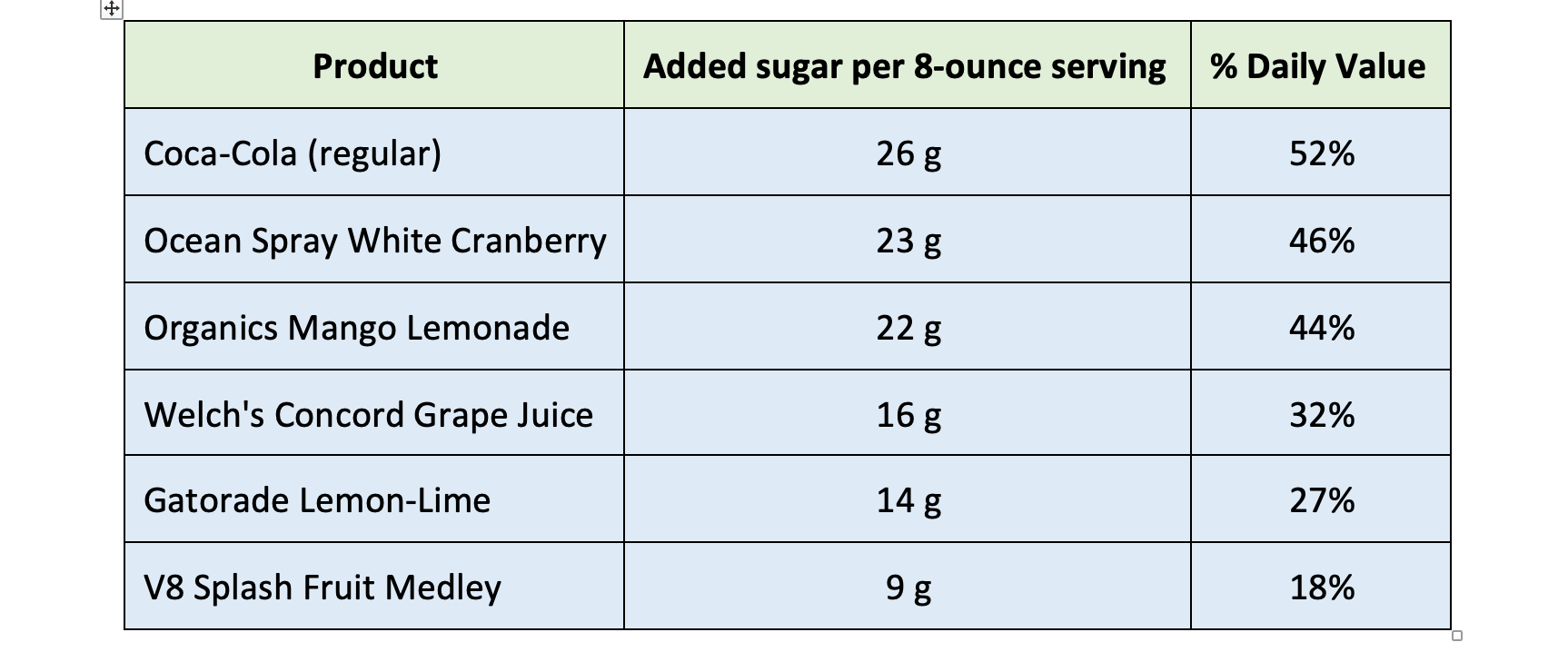
In short, just 5 minutes of “research” revealed that Coca-Cola has nearly twice as much added sugar as Gatorade, and nearly three times as much as a V8 product.
There’s no way of knowing how this variability influenced the new study’s findings, though it clearly undercuts the validity.
3. Ambiguous coding.
The researchers only found higher rates of cancer among those who drank more than 8 ounces of SSBs per day.
This lumps together an almost unlimited range of consumption. At what amount of SSB intake does cancer risk actually start to rise? 9 ounces per day? 12 ounces? 64 ounces? We have no way of knowing. (And, again, the amount consumed is ambiguous given how much SSBs vary in sugar content.)
Someone might say, oh not that many people drink excessive amounts of SSBs.
Well, not that many people developed gastric cancer in this study. There were 278 cases out of 112,284 participants. That’s about one-fifth of one percent of the sample.
Meanwhile, roughly 12% of American adults consume at least 24 ounces of SSBs per day. That figure doesn’t include sweetened coffees and teas.
My point is that even if we trusted the study methods (which we shouldn’t), the results have almost zero practical value, because people who drink small amounts of relatively low-sugar SSBs are lumped together with those who drink enormous quantities of more sugary products.
For instance, the person who drinks 12 ounces of V8 every day is consuming 13.5 grams of added sugar. The person who drinks four 12-ounce cans of Coke every day is consuming 156 grams of added sugar, or more than 11 times as much as the V8 person, but they’re both included in the same group.
What about other data?
Some studies link SSB intake to cancer in humans; others don’t. In some cases, the data are inconsistent with respect to specific outcomes (e.g., colorectal cancer). These studies adjust for BMI, in hopes of determining whether SSBs influence cancer risk apart from their effects on obesity.
Studies that do report SSB effects only show small differences in relative and/or absolute risk.
For instance, regarding absolute risk, a recent JAMA Network study linked SSBs to liver cancer and liver disease mortality, but fewer than 1% of participants experienced either of these undesirable outcomes. The same can be said of the new study. The implication is that the highest levels of SSB intake increase the chances of outcomes that are still extremely rare.
(A statistical concern here is that the rarer the outcome, the more sensitive the numerical conclusions will be to case rates. A few more cancers in one group, or a few less in another, will change the risk estimates quite a bit.)
Nearly all of the studies with humans presume indirect effects. One exception is the possibility that fructose intake increases the risk of colorectal cancer because, unlike glucose, fructose reaches the colon relatively easily and may promote tumor growth and division there. This is speculative though, and, like many of the other claims about sugar-cancer connections, based mainly on animal models.
My takeaway? Growing but not conclusive evidence that excessive intake of added sugars, particularly from SSBs, may increase the risk of cancer.
4. How much added sugar can a person safely consume?
You can find Elvis’s last meal on Instagram (along with a recipe). Apparently The King enjoyed six chocolate chip cookies and four scoops of vanilla ice cream before taking his final bow.
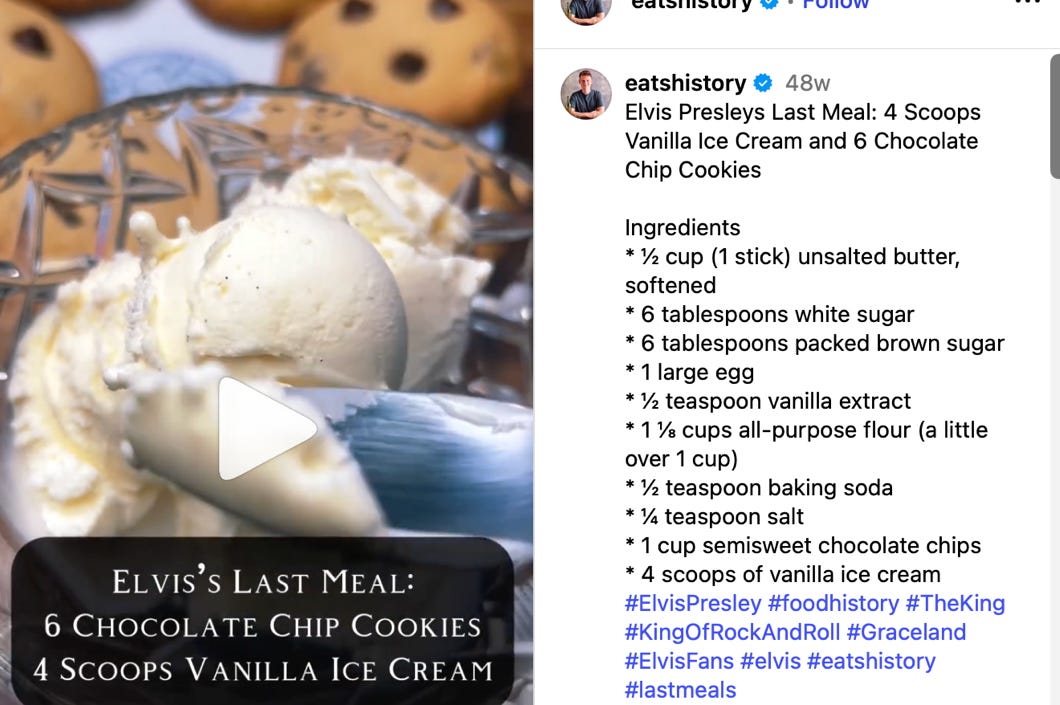
I’m willing to call this too much added sugar for one meal, but how should “too much” be defined?
I suspect you want a number. I do too. I’d like to know how many grams of added sugar can be eaten without increasing the risk of cancer (and other health problems), so that I can make informed decisions about my indulgences.
The upside of living in a “statisfied” society is that science, with the help of statistics, offers useful numerical guidelines promoting health. The downside is that the numbers promise more than they can deliver.
The maximum amount of added sugar you can eat per day without increased health risks would depend on your size, age, health, activity levels, and other personal variables. Even if you had a number in mind, some product labels (and the vast majority of restaurants) provide no details on exactly how much added sugar you’re consuming.
So, here’s what I take to be the three best sources of guidance:
1. Health organizations.
The 2025-2030 Dietary Guidelines for Americans (DGA), jointly produced by the CDC and USDA, preaches abstinence but is informed by the assumption that some of us won’t actually abstain:
“While no amount of added sugars or non-nutritive sweeteners is recommended or considered part of a healthy or nutritious diet, one meal should contain no more than 10 grams of added sugars.
Avoid sugar-sweetened beverages, such as sodas, fruit drinks, and energy drinks.
When selecting snack foods, added sugar limits should follow FDA “Healthy” claim limits. For example, grain snacks (e.g., crackers) should not exceed 5 grams of added sugar per ¾ ounce whole-grain equivalent, and dairy snacks (e.g., yogurt) should not exceed 2.5 grams of added sugar per ⅔ cup equivalent.”
This is much more specific than the DGA’s guidance on alcohol, for instance, and it’s more conservative than what organizations like the WHO recommend. Although the revised DGA offers some lamentable advice about other foods (e.g., red meat and other animal proteins), I think it handles sugar reasonably well.
Still, I don’t think the scientific data justifies one-size-fits-all advice such as this. Nor does it justify specific cut-offs, such as 10 grams of added sugar per meal. The value of nutritional advice from health organizations like the CDC and the WHO is in providing some context for eating habits. If your sugar intake is much higher than recommended, it might be worth reflecting on your diet and consulting with a health professional.
2. Science.
Studies on the health impacts of added sugar intake suggest that too much is bad for you (even if the cut-off can’t be clearly defined). And, the science translates into useful tips: Consume added sugars slowly, particularly if they’re SSBs. Eat or drink them with food – ideally whole foods. And, if you’ve already consumed a substantial amount, engage in some physical activity to reduce the post-consumption glucose spike.
3. Personal experience.
Anecdotes aren’t science. We all know someone who ate candy or drank soda all day and lived into their 90s. But I also think it’s unwise to completely discount anecdotal evidence, in spite of its limitations.
The most reliable anecdotes are what you notice about your own experience. How do you feel after drinking an SSB or eating a sugary food?

If you get sugar highs and then crash, or you find (as I do) that consuming sugar on an empty stomach gives you heartburn, your body is sending you an important message. Rather than just counting grams of sugar – or relying on an app, as people increasingly do – perhaps just noticing how you react to sugar may help inspire healthier consumption. Your personal experiences are data too.
Thanks for reading!
Nice analysis, Ken, although I'm not convinced that "listen to your body" is a useful instruction for most people. Our perceptions are so easily distorted by all kinds of biases.
My approach to sugar (and alcohol) is that if something isn't demonstrably good for me, and tends to be addictive, I don't want to put it in my body.
There is a rehab program that I underwent in order to cure my sweet tooth:
https://drmick.substack.com/p/rehabilitating-my-sense-of-taste
Sugar is linked to slavery in my mind. Even before cotton, the sugar-producers relied on slave labor.